

Why More International Students Are Choosing Regional Australia for PR Pathways in 2026
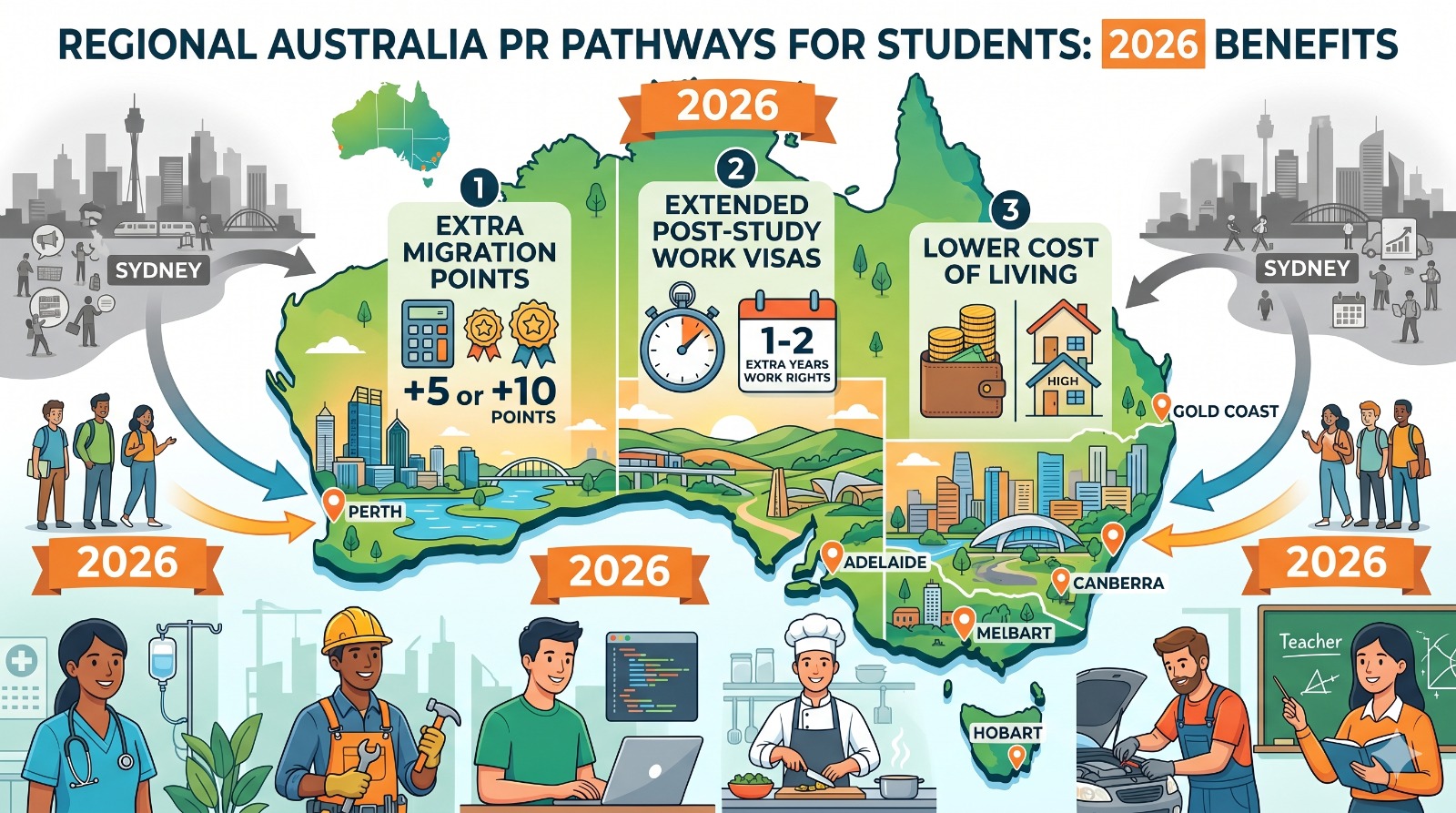
For years, cities like Sydney, Melbourne, and Brisbane were seen as the default choice for international students coming to Australia.
Better job opportunities. Bigger communities. More universities. More lifestyle options.
But in 2026, more students are beginning to ask a different question:
“Am I building a long-term migration pathway in the right location?”
As Australia’s migration system continues shifting toward workforce shortages, regional development, and priority occupations, many on-shore international students are now exploring regional cities like Perth and Adelaide as part of their long-term strategy.
This does not mean Permanent Residency (PR) is guaranteed in regional Australia.
However, it does mean regional pathways are becoming increasingly attractive for students looking to improve their long-term migration opportunities in Australia.
Why the Migration Landscape Is Changing
Australia’s migration priorities are evolving.
Recent Federal Budget discussions, workforce planning announcements, and skilled migration trends continue to highlight several major challenges Australia is trying to address:
• housing and infrastructure shortages
• healthcare workforce demand
• ageing population pressures
• regional workforce gaps
• trade and construction shortages
• Growing demand in the care and education sectors
Government agencies, including Jobs and Skills Australia and the Department of Home Affairs continue to emphasise the importance of skilled workers in sectors experiencing long-term shortages.
As a result, migration pathways are increasingly rewarding applicants who:
• align with in-demand occupations
• gain Australian work experience
• study in regional areas
• pursue occupations needed outside major metropolitan centres
This is one reason why regional Australia is receiving growing attention among international students already on-shore.
What Counts as “Regional Australia” for Immigration?
One of the biggest misconceptions among students is that “regional Australia” means remote towns or isolated rural areas.
In reality, several major Australian cities are classified as regional for migration purposes.
This includes cities such as:
• Perth
• Adelaide
• Canberra
• Gold Coast
• Hobart
According to Study Australia’s regional education information, students in eligible regional areas may be eligible for additional migration-related benefits, depending on their circumstances and visa eligibility.
For many students, this completely changes the conversation.
Regional Australia does not always mean sacrificing:
• lifestyle
• city infrastructure
• multicultural communities
• career opportunities
• public transport
• university quality
In fact, cities like Perth and Adelaide continue to attract international students looking for a balance between career growth and long-term migration planning.
Why Perth and Adelaide Are Becoming Popular PR Pathway Options
1. Additional Migration Points
Students pursuing eligible regional pathways may receive additional points toward certain skilled migration pathways, including regional visas such as the Subclass 491 visa.
For applicants in competitive occupations, these extra points can become strategically important.
2. Extra Post-Study Work Rights
Eligible graduates studying in regional Australia may qualify for additional post-study work rights under the Temporary Graduate visa framework.
This can provide more time to:
• gain Australian work experience
• improve English scores
• secure employer sponsorship
• strengthen migration eligibility
• build professional networks
For many students, additional time in Australia can significantly improve long-term planning flexibility.
3. Lower Competition Compared to Major Cities
In highly populated cities like Sydney and Melbourne, competition for:
• graduate jobs
• internships
• sponsorship opportunities
• Skilled migration invitations
can become extremely intense.
Regional cities may offer:
• smaller candidate pools
• workforce shortages in key industries
• stronger demand for skilled workers
•more accessible employer relationships
This does not mean opportunities are “easy.”
However, many students find regional pathways more strategically manageable compared to oversaturated metropolitan markets.
4. Lower Cost of Living
Affordability also plays a major role.
Compared to Sydney and Melbourne, many regional cities offer:
• lower rental costs
• reduced transport expenses
• more affordable lifestyles
• less financial pressure during studies
This can help students focus more on:
• career building
•professional development
• gaining work experience
•long-term planning
rather than constantly managing financial stress.
Why Trade and Skills-Based Careers Are Receiving Attention
Australia continues facing workforce shortages across several essential industries.
Recent migration and workforce discussions have repeatedly highlighted demand in sectors such as:
• healthcare
• aged care
• childcare
• construction
• engineering
• hospitality
• automotive trades
• teaching
• social work
• information technology
Trades and hands-on occupations are increasingly being recognised as critical to Australia’s economic and infrastructure growth.
According to workforce planning discussions and skills shortage reporting from Jobs and Skills Australia, many practical occupations continue experiencing persistent demand across regional Australia.
This is one reason many students are reconsidering:
• course selection
• occupation pathways
• long-term employability
• regional career opportunities
before completing their studies.
If You’re Currently Studying in Sydney or Melbourne, Should You Move?
This depends entirely on your:
• occupation
• visa status
• points score
• work experience
• employer opportunities
• long-term goals
For some students, staying in Sydney or Melbourne may still make sense.
For others, relocating strategically to a regional city could improve:
• migration competitiveness
• sponsorship opportunities
• work experience access
• long-term pathway planning
The important thing is not to make migration decisions blindly or based only on social media advice.
Every student’s pathway is different.
A strategy that works for:
• nursing
• cookery
• IT
• childcare
• automotive
• engineering
may not work the same way for another occupation.
This is why early planning matters.
Choosing Courses Without Understanding Occupation Demand
Not every course leads to the same employment or migration outcomes.
Students should understand:
• occupation lists
• workforce demand
• regional opportunities
• skills assessment requirements
• employability trends
before making major education decisions.
Following the Generic Migration Advice Online
Migration pathways change frequently.
Advice from friends, TikTok videos, or outdated forums may not reflect current policy settings or individual circumstances.
What Should International Students Do in 2026?
Students looking to strengthen their long-term opportunities in Australia should consider:
• reviewing occupations currently in demand
• understanding regional migration pathways
• gaining Australian work experience early
• improving English test scores
• building employer relationships
• researching state nomination requirements
• planning visa pathways before graduation
• seeking proper education and migration guidance
The earlier students plan, the more flexibility they usually have.
How TIEM Supports International Students
The Iconic Education and Migration (TIEM) supports international students with education and migration guidance designed around long-term planning, not just short-term enrolments.
Depending on individual circumstances, TIEM may assist students with:
• course selection guidance
• regional study options
• understanding migration pathways
• student visa support
• employer-sponsored pathway discussions
• long-term education planning
• migration consultations
For many students, the biggest challenge is not a lack of opportunity.
There is a lack of clarity.
Understanding how education, occupation demand, regional pathways, and migration strategy connect can make a significant difference when planning a future in Australia.
Frequently Asked Questions
Is Perth considered regional for immigration purposes?
Yes. Perth is classified as a regional area for eligible migration purposes under the current Australian migration settings.
Is Adelaide considered regional for international students?
Yes. Adelaide is considered regional for eligibility for migration and study-related benefits.
Does studying in regional Australia guarantee PR?
No. Studying in regional Australia does not guarantee Permanent Residency.
However, depending on individual circumstances, it may provide additional migration advantages such as:
• extra points
• additional post-study work rights
• access to regional pathways
Are trade occupations in demand in Australia?
Many trade and practical occupations continue experiencing workforce demand across Australia, particularly in regional areas and infrastructure-related sectors.
Can international students move to a regional city after studying in Sydney?
Depending on visa conditions and personal circumstances, some students may choose to relocate to regional areas later as part of their long-term planning strategy.
Professional guidance is important before making migration-related decisions
Is regional Australia only rural or remote towns?
No. Several major Australian cities, including Perth and Adelaide, are classified as regional for migration purposes while still offering urban lifestyles and strong infrastructure.
Wondering if regional Australia is your best pathway to PR? Don’t navigate the complex migration system alone. Fill out the quick form below to connect with a TIEM expert and build an education and visa strategy tailored to your goals!


Post a Comment